Client project2 min read
Q-BitX, Post-Quantum Bitcoin: Mining Pool, Wallet and Node
Tech stack
Services
- →Mining pool development in Go
- →Wallet improvements
- →Node packaging: Docker and macOS build
- →Running and maintaining the first node
Deliverables
- ✓Stratum mining pool on Go and PostgreSQL with lprop and solo payouts (beta)
- ✓Repository for a quick node start in a Docker container
- ✓macOS build of the node
- ✓The first Q-BitX node in the network
Challenge
Q-BitX is a post-quantum Bitcoin: a Proof-of-Work chain built to stay secure once quantum computers can break today's signatures. A new chain needs infrastructure around it from the first day, so that people can run nodes, mine and trade the coin.
My Part
I joined early and worked on several pieces at once: I took part in developing the mining pool and in improving the wallet. I was also the first person ever to run a Q-BitX node, and I built a repository for a quick node start in a Docker container: I packaged and dockerised the node, built it for macOS, and maintained it.
The First Node
The very first node ran on my laptop. The logs below show the pool starting against it: the Stratum server listening for miners, the job maker polling the node every 10 seconds, and new blocks arriving one after another.
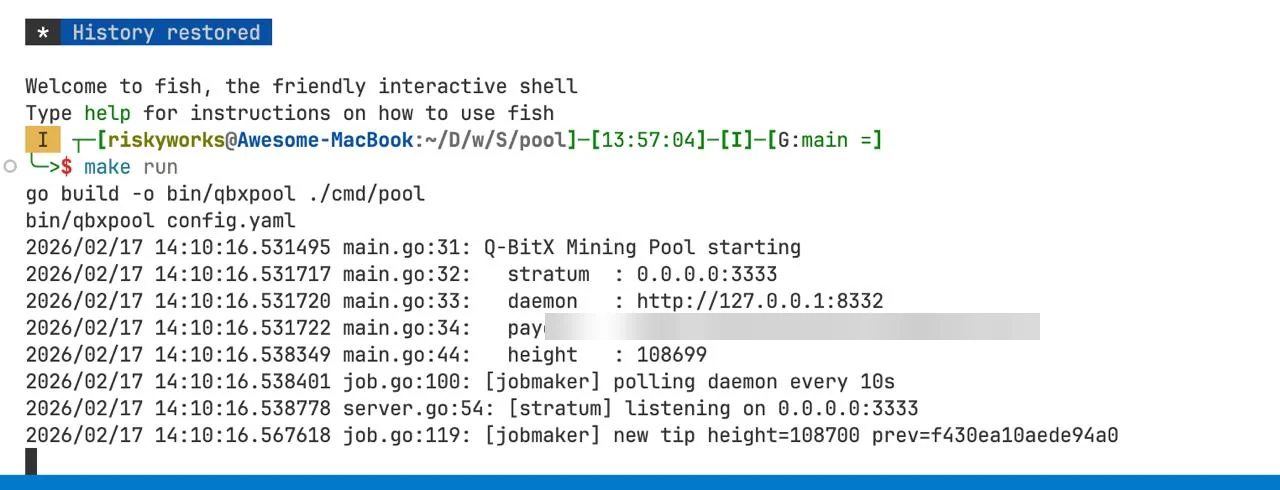
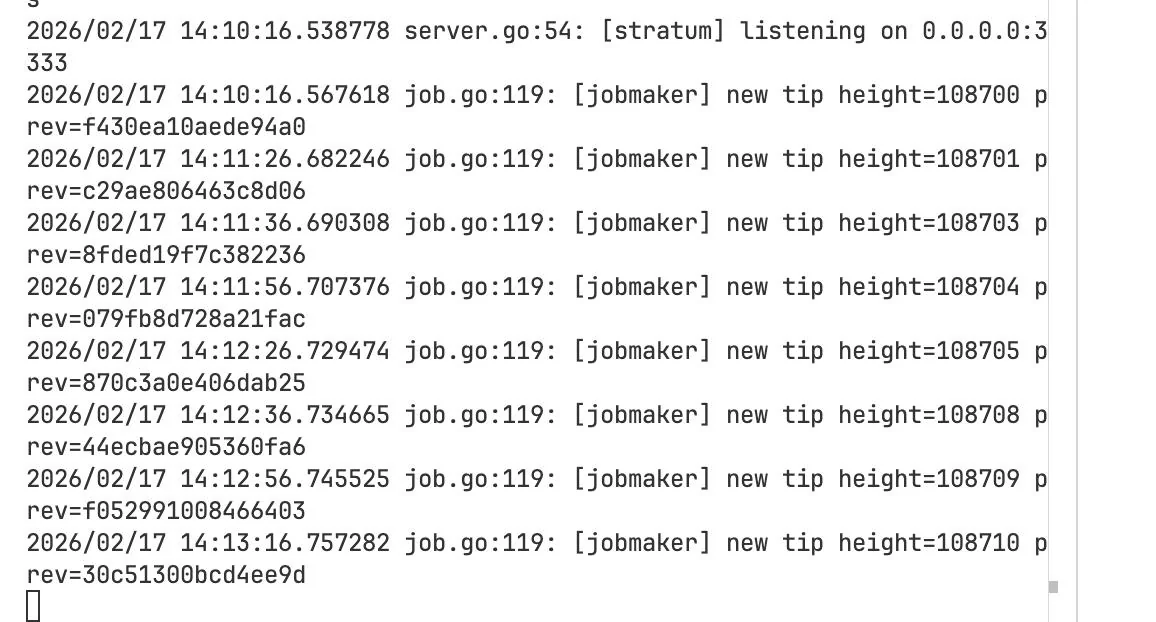
The first Q-BitX node, running on my laptop
Mining Pool
The pool, now in beta, is a Stratum server written in Go. It accepts connections from miners, tracks submitted shares and pays out once blocks mature. It keeps its data in PostgreSQL, applies its own migrations on startup, and supports two payout schemes, lprop and solo, so several pool instances can run side by side on one database. Its public face is pools.qbitx.org, which shows hashrate, connected miners and pool performance live.
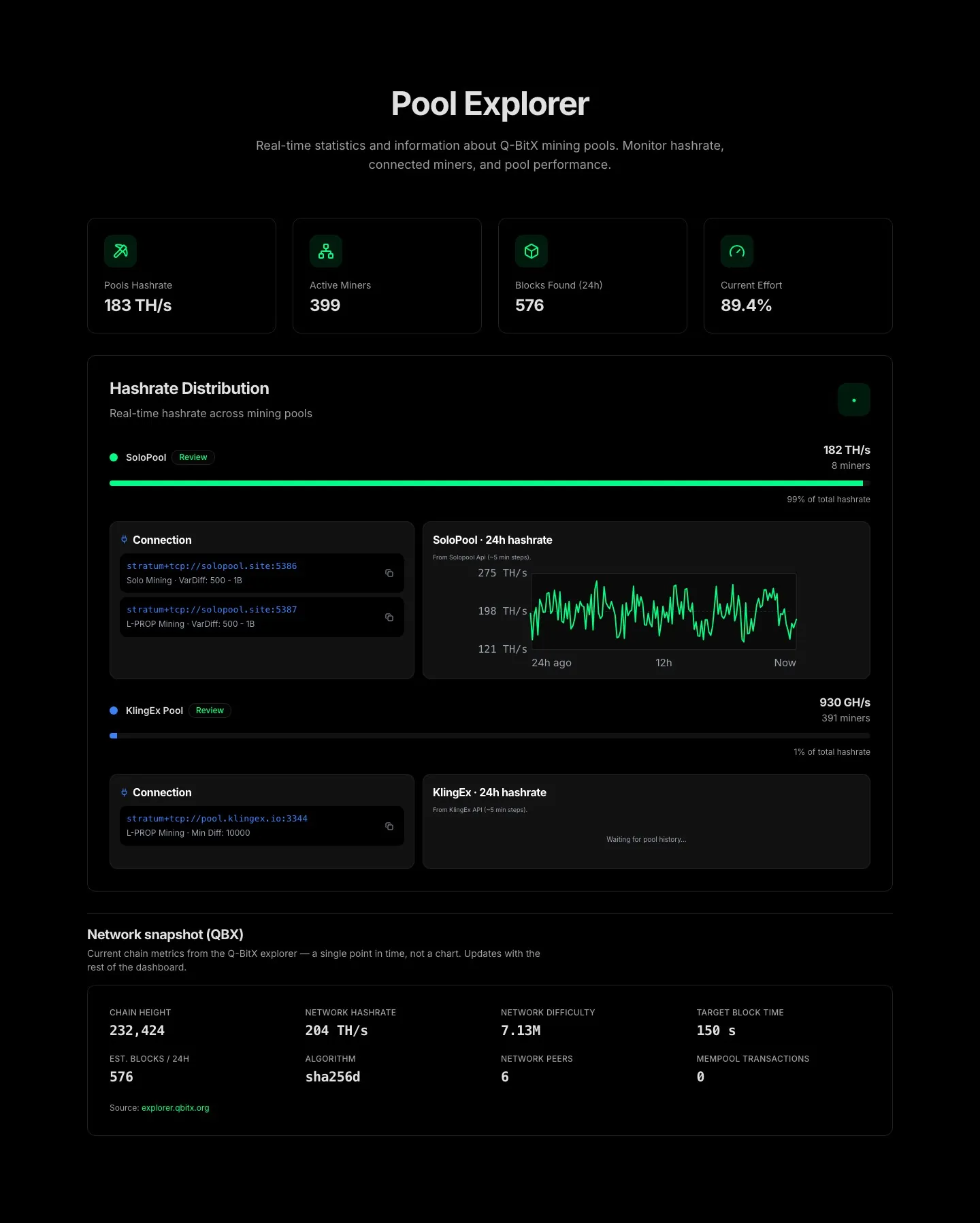
pools.qbitx.org
The Site
The project site at qbitx.org explains the technology and links to downloads, the explorer and the mining pools. The exchange page lists where QBX can be bought and sold.
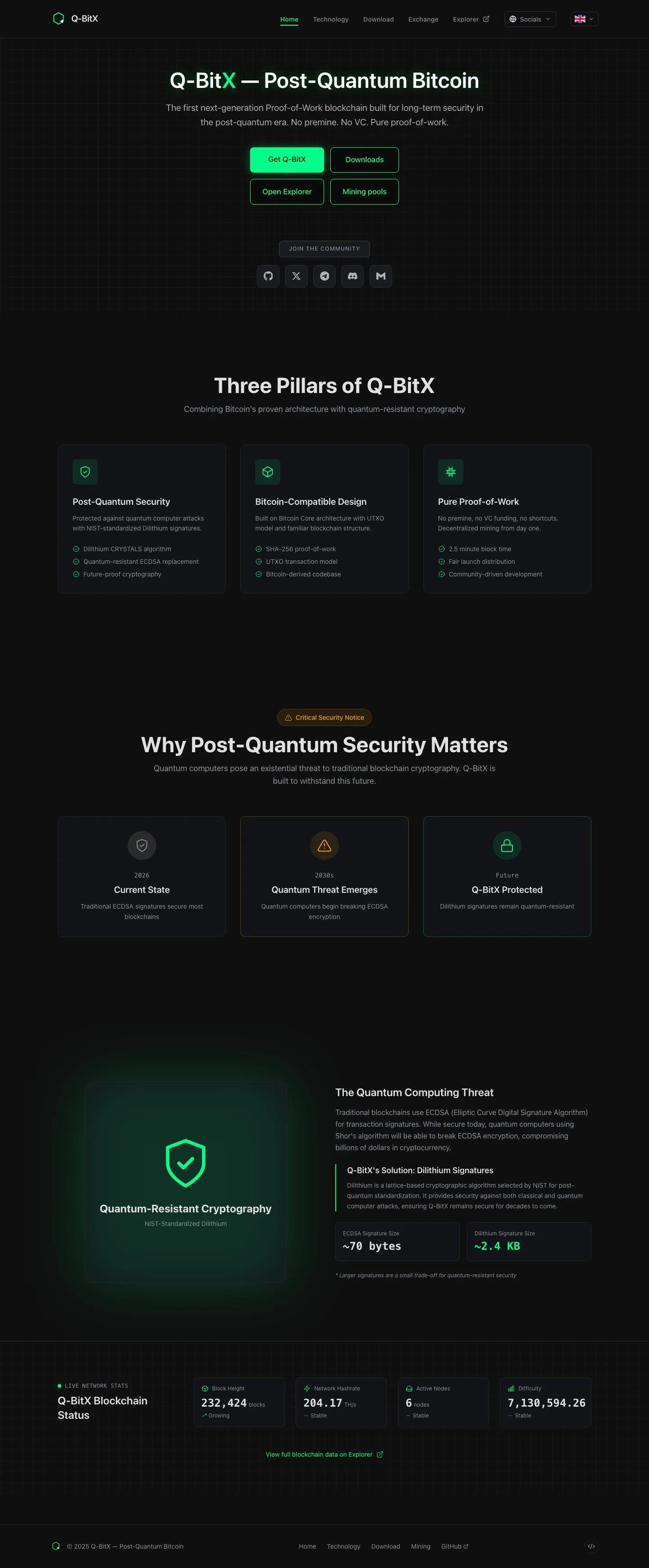
Static snapshot — scrollable Safari preview
Open for contract collaboration
I am available for contract-based collaboration. If you have an interesting project idea, schedule a call via Calendly.
Schedule a 30-min call