Personal project2 min read
MEV Bots, Ethereum Research and Development

Tech stack
Services
- →MEV research on Ethereum: sandwich, frontrunning, arbitrage
- →Mempool analysis and bundle simulation tooling in Rust
- →Smart contract simulation, fuzzing and testing
- →Open-source contribution in Rust
Deliverables
- ✓Tools for high-throughput mempool analysis, transaction tracing and bundle simulation
- ✓A lightweight MEV R&D workflow: custom simulators, fuzzing and replayable forks
- ✓Strategies validated on Foundry and Hardhat forks, with the key failure patterns documented
- ✓Smart contract and client deployed and debugged on the Sepolia testnet
- ✓Strategy patterns for paradigmxyz/artemis and mev-template-rs
Challenge
In 2024 I ran an R&D project on MEV in Ethereum: how bots extract value from the order of transactions in a block, and where that leaves smart contracts exposed. The aim was to understand the attack patterns well enough to build and test bots of our own.
Research
The research covered the three main MEV patterns, sandwich attacks, frontrunning and arbitrage, and was done in Rust on top of Flashbots. I built tools for high-throughput mempool analysis, transaction tracing and bundle simulation, and used them to find reentrancy risks in contracts.
Strategies were validated on Foundry and Hardhat forks of the network, which showed the key failure patterns: where a bundle that looks profitable breaks once it meets real state.
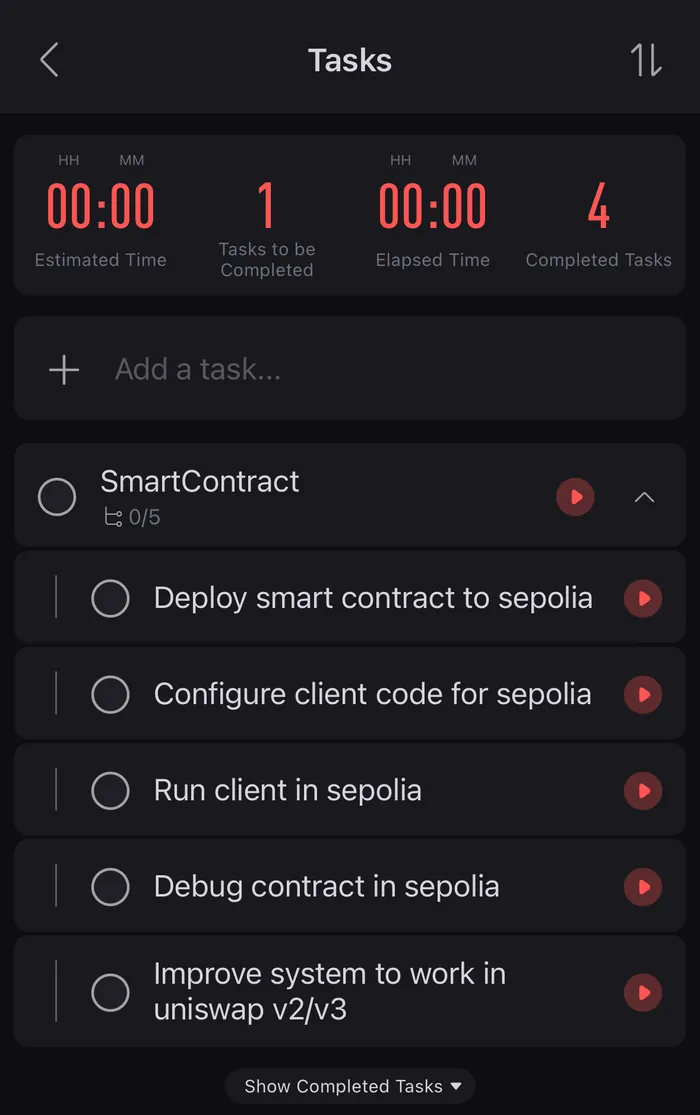
Around that I designed a lightweight R&D workflow: custom simulators, fuzzing, forks that can be replayed, and analysis of MEV-exploitable flows and of how easily an AMM pool can be sandwiched. Day to day the work went in short, tracked steps: deploy the smart contract to the Sepolia testnet, configure the client code for it, run and debug the pair there, then extend the system to Uniswap v2 and v3 pools.
Talking to the Contributors
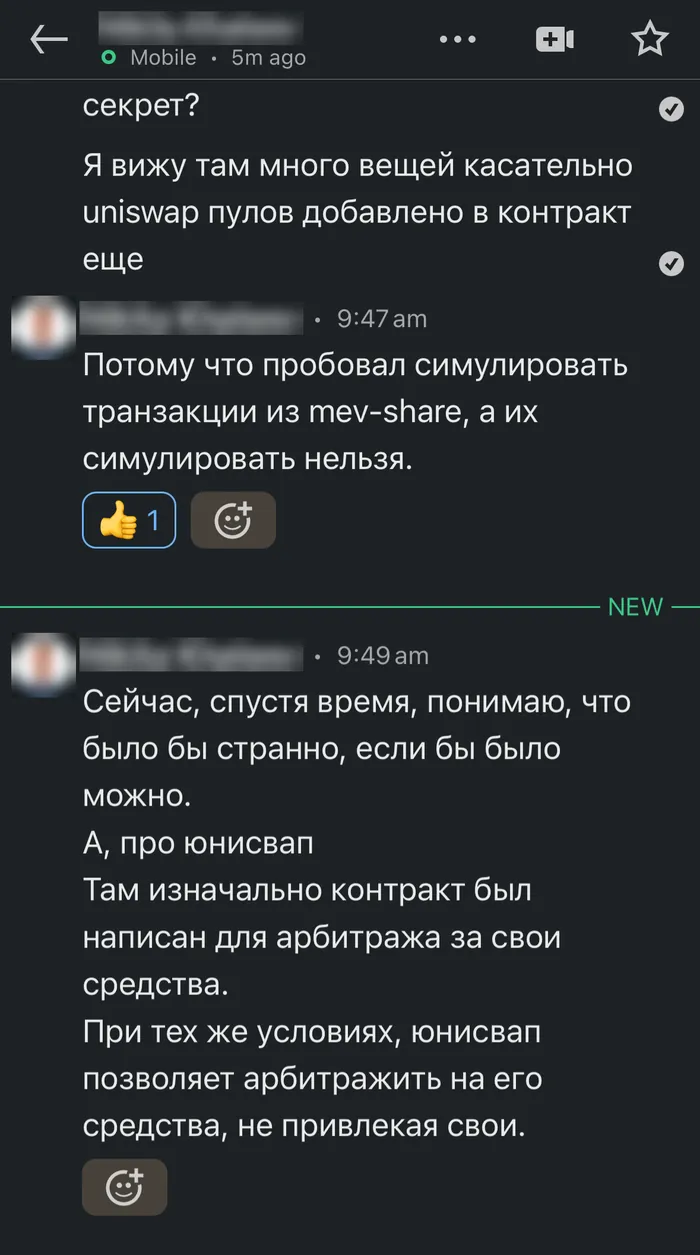
We also talked to contributors of paradigmxyz/artemis, the largest Rust framework for MEV bots, and asked them the questions we had. Many people from the Russian-speaking community worked in the field, which made those conversations easy to start. In the chat below, one of them explains why transactions from mev-share cannot be simulated and how a Uniswap pool lets a contract run an arbitrage on the pool's own funds instead of its owner's.
Open Source
The research went back into open source: strategy patterns for the Artemis framework, and mining-pool-level attack patterns and block reorganisation simulations in the mev-template-rs boilerplate.
Open for contract collaboration
I am available for contract-based collaboration. If you have an interesting project idea, schedule a call via Calendly.
Schedule a 30-min call