Building a Context Consolidator So AI Agents Stop Starting Blind
- Published on
- • 2 mins read•--- views
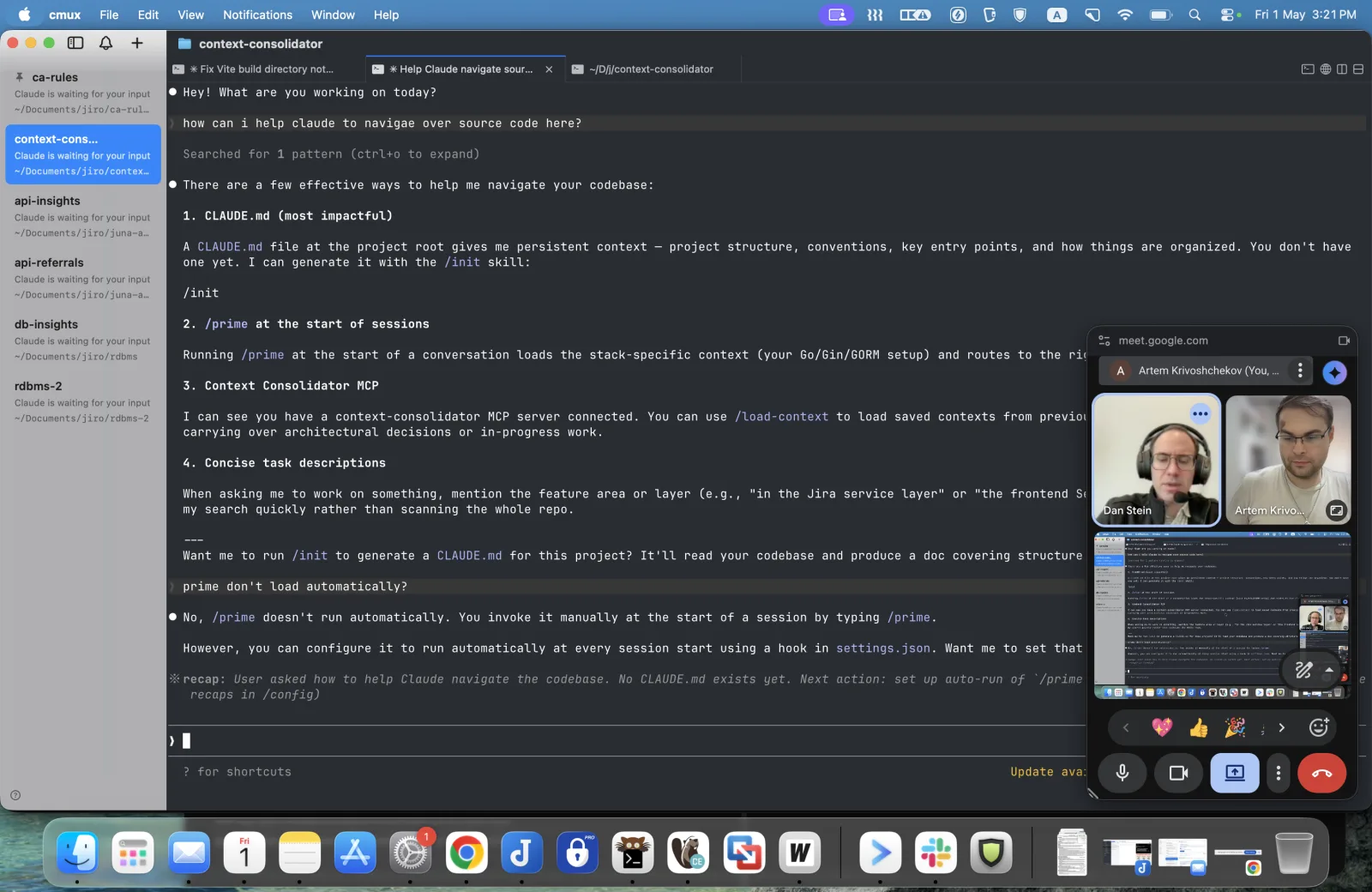
Almost from the first day in the new role I started building a utility to solve a problem I hit immediately: every AI coding agent begins a task blind. The real description of a task is scattered across a Jira ticket, a Slack thread, a pull request, the codebase, and the meeting where the decision was actually made. So each session opened with the same discovery, and the context window filled with search results before any real work began.
The idea is to aggregate everything in one place: records from Slack, issues and comments from Jira, information about the codebase, and the summaries from every meeting. Collect it once into a named context, keep it in sync, and let the agent load it in a single command instead of rediscovering the same facts and bloating its context each time.
That utility grew into a full desktop app, VibeCodeWay (Context Consolidator was its original name, visible in the window title above). This post is where it started: one screen recording of an agent asking how to navigate the code, and the decision to make "everything about this task" a first-class object.
The practical payoff is simple. The agent stops paying the discovery tax on every session, the context window holds the task instead of the search for it, and nothing leaves the machine. The next step after aggregation was acting on it in place, which is the workspaces and the integrated editor that came later.
Table of Contents
Related
Projects
VibeCodeWay - Code editor for AI
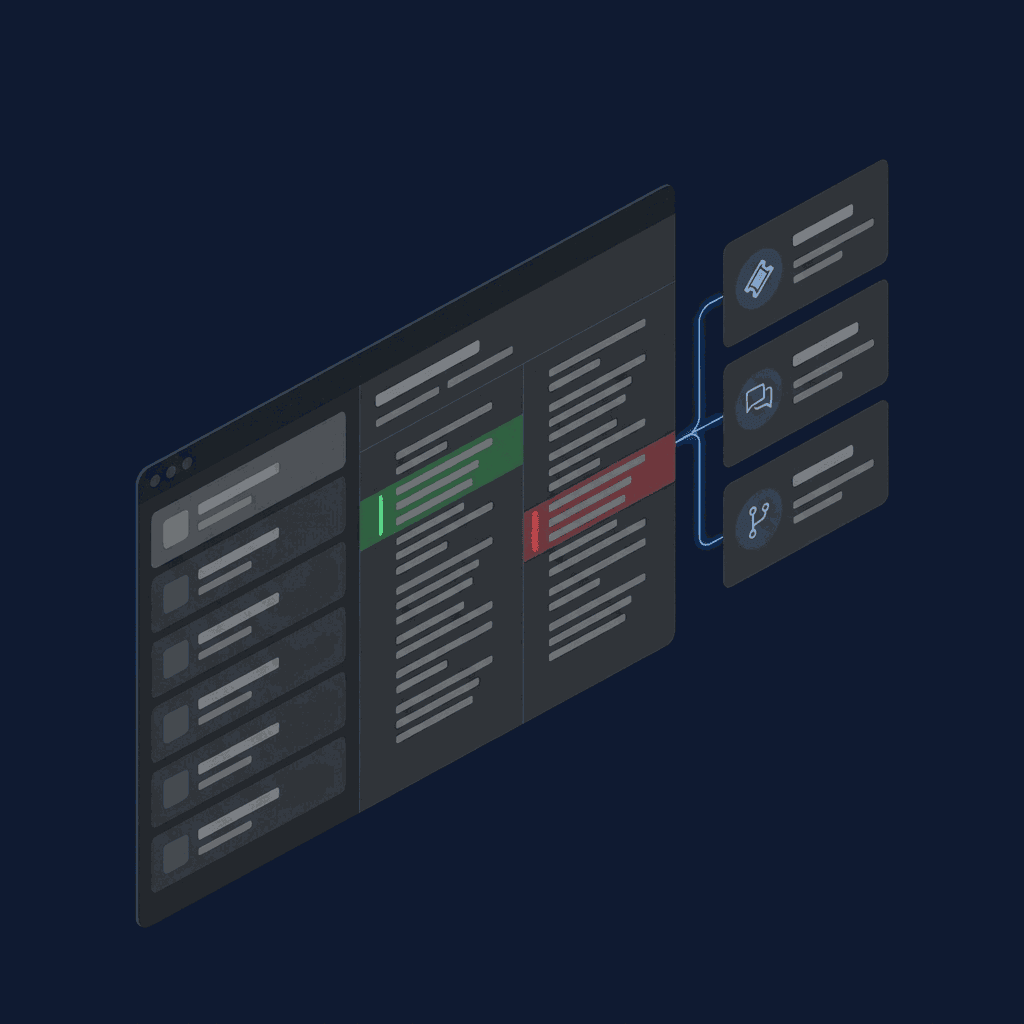
Before: a task lived across a Jira ticket, a Slack thread, a pull request and the code, and every AI coding agent started blind, re-running discovery and bloating its context each time. After: a local desktop app that bundles everything about a task into one named context, keeps it in sync, and hands it to the agent in a single command.
Posts
Solve With AI: One Button, Full Context, Minimum Manual Work
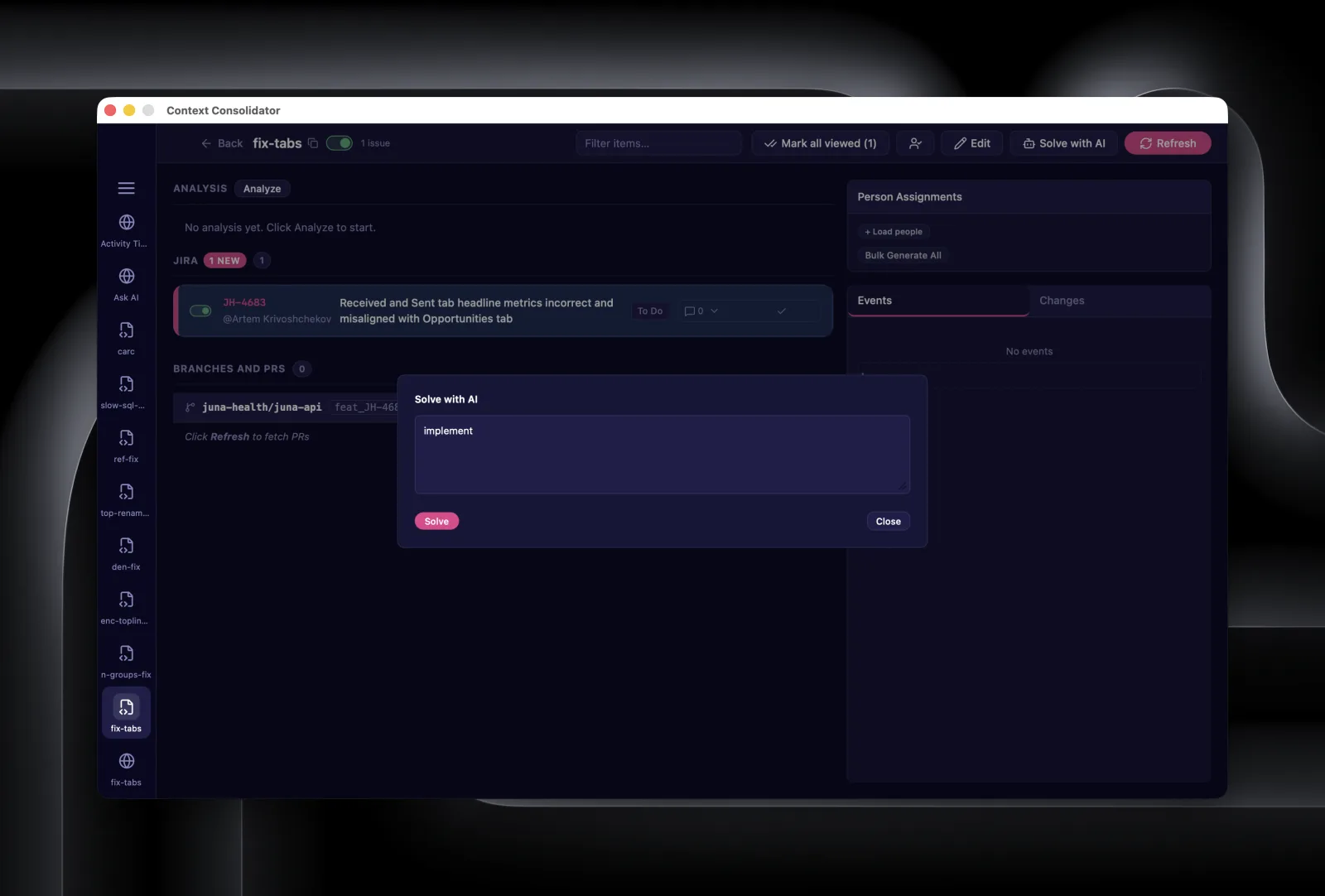
The Solve with AI action in VibeCodeWay: with the whole task context already gathered, the developer presses one button and the system does the work, then stays available to review it in conversation.
VibeCodeWay: Workspaces for Parallel Work Across Many Branches
Added a workspace manager to VibeCodeWay: create, edit and delete git worktrees so one clone of a repository can host work on many branches in parallel.
jira-mcp: Run Your Jira Backlog and Sprints Straight from AI Chat
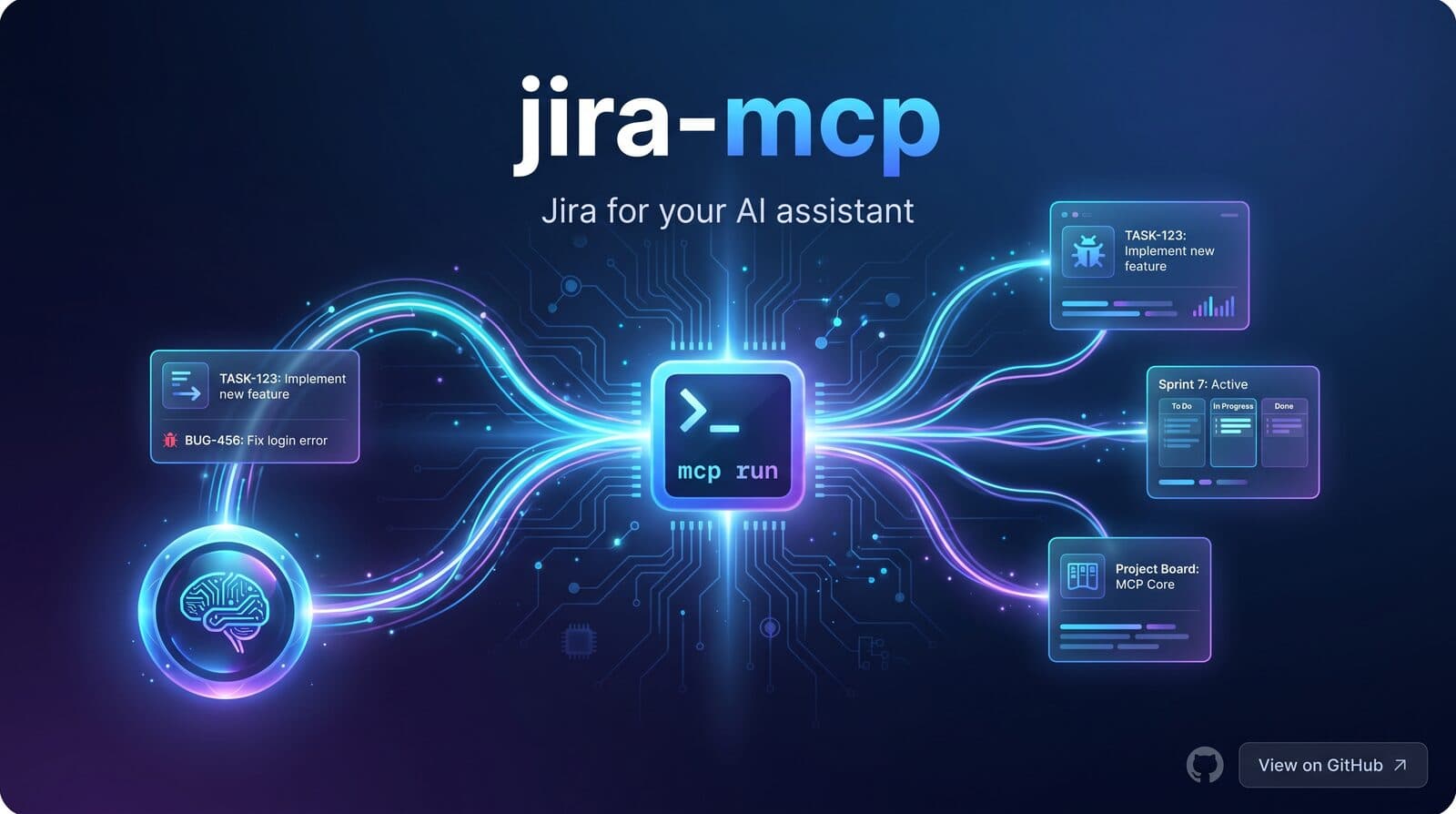
I built jira-mcp, a Model Context Protocol server in Go that gives Claude, Cursor, and any MCP client a real handle on Jira: search with JQL, create and edit work items, run sprints, all from chat, riding on the Atlassian CLI you already log into.
Open for contract collaboration
I am available for contract-based collaboration. If you have an interesting project idea, schedule a call via Calendly.
Schedule a 30-min call