CactusPlay, AI News Publisher via n8n + WordPress
Before: gaming news had to be written and published manually, slow, inconsistent, and impossible to scale alongside the marketplace. After: an n8n workflow monitors gaming news sources, rewrites articles with GPT, and publishes to WordPress automatically, with zero manual steps.
Stack
Challenge
CactusPlay (a marketplace for games and in-game items) needed a content strategy to drive organic traffic. Gaming news is high-volume and time-sensitive, publishing manually meant either hiring writers or accepting stale content. The platform needed a way to publish fresh, SEO-relevant articles on a daily cadence without a dedicated editorial team.
Options Considered
- RSS-to-post plugins (WP RSS Aggregator), republish raw RSS feeds directly. Fast to set up, but duplicated content penalises search ranking. Rejected.
- Freelance writers on retainer, quality content, but expensive at scale and slow turnaround on breaking news. Rejected.
- n8n workflow: RSS monitoring + GPT rewrite + WordPress REST API publish: chosen. Fully automated, generates original-enough rewrites to avoid duplicate content penalties, publishes within minutes of source article going live.
Decision
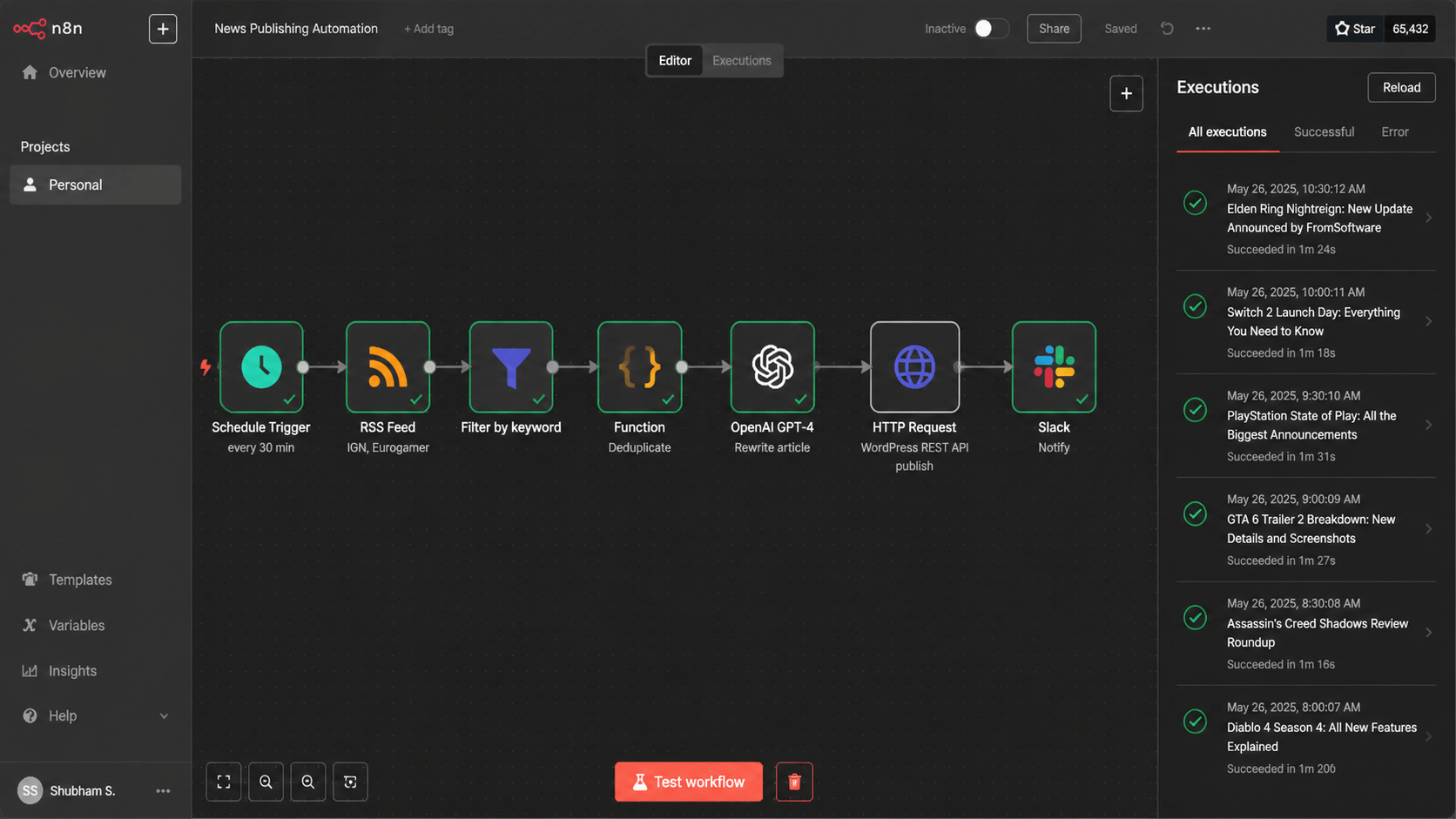
An n8n workflow runs on a 30-minute schedule. It polls RSS feeds from major gaming news sources (IGN, Eurogamer, PlayStation Blog, Xbox Wire). New articles are filtered by relevance (keywords matching CIS gaming audience interests). The article body is passed to GPT-4 with a prompt instructing it to rewrite the piece in the platform's editorial voice, add an SEO-optimised headline and meta description, and append a call-to-action linking to relevant products in the CactusPlay store. The result is posted to WordPress via the REST API as a draft, then auto-published after a configurable delay.
Implementation
n8n self-hosted: RSS Feed node polls sources on schedule, an IF node filters articles by keyword list (maintained as an n8n variable), a Function node deduplicates against a simple SQLite log of published article URLs. The HTTP Request node calls the OpenAI API. A second HTTP Request node posts to the WordPress REST API with authentication via Application Password. Categories, tags, and featured image (fetched from the source article's OG image) are set automatically. A Slack notification confirms each published post for monitoring.
Outcome
30, 50 articles published per week with zero manual editorial effort. Organic search traffic to the blog section grew steadily over three months. The pipeline survived multiple WordPress and RSS feed structure changes through targeted n8n node updates.
Open for contract collaboration
I am available for contract-based collaboration. If you have an interesting project idea, schedule a call via Calendly.
Schedule a 30-min call