Client project
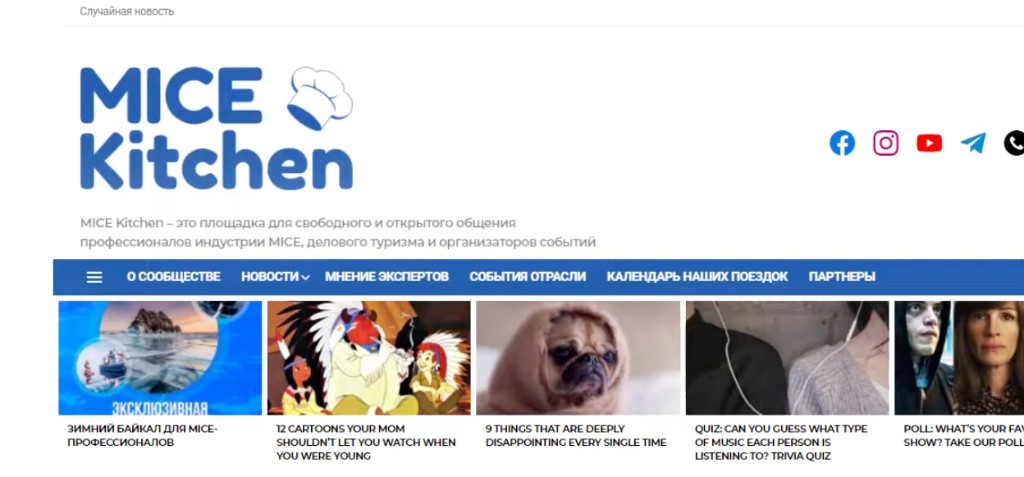
MICE Kitchen, News Portal for the MICE & Business Travel Community
Tech stack
Services
- →Discovery and editorial architecture for a professional community news portal
- →WordPress setup with news-optimised theme customisation
- →Category-level email subscription system
- →On-page SEO configuration, Yoast, structured metadata, XML sitemap, OG tags
- →Contact forms with source tagging and editorial inbox routing
- →Social media profile integration across header and footer
- →CMS training for independent editorial team operation
Deliverables
- ✓WordPress news portal with three editorial categories and dedicated archives
- ✓Category subscription system, readers follow topics, not the full firehose
- ✓SEO-ready article and archive templates with structured metadata
- ✓Contact page with inbound enquiry forms and social channel links
- ✓Editor-operated publishing workflow, with zero developer dependency post-launch
Client & Context
MICE Kitchen is a professional community for event planners, corporate travel managers, and MICE industry specialists. The community was active, events, expert opinions, industry news, but it had no single place where members could reliably find and follow the content that mattered to them. News lived in Telegram posts and email blasts that disappeared from view within hours.
The ask was direct: build a proper news portal. Not a landing page, not a blog, a categorised, searchable, subscribable editorial platform that a small team could run without a developer on speed-dial.
Discovery
Three pain points shaped the design from the start:
- Content wasn't findable. Search engines had nothing to index. People outside the Telegram channel didn't know the community existed.
- Readers had no way to follow specific topics. A travel manager interested only in hotel news got everything or nothing. There was no middle ground.
- The team had no publishing workflow. Formatting and publishing each piece required copy-pasting into multiple channels by hand.
Options Considered
- Tilda or similar no-code builder: rejected. Category-level subscription logic and structured SEO metadata exceeded what visual builders handled cleanly. Plugin ecosystem needed for subscriptions simply wasn't there.
- Headless CMS + custom frontend: rejected. A small editorial team needed a CMS they could operate independently. A React-based frontend would have added maintenance overhead with no user-facing benefit.
- WordPress with a customised news theme: chosen. Native category taxonomy mapped directly to subscription segments. The plugin ecosystem covered SEO (Yoast) and email subscriptions without custom code. The team was up and publishing on day one.
Decision
WordPress was selected not by default but by fit. The content model, categories, tags, authors, archives, matched WordPress's native taxonomy precisely. The editorial team needed a familiar, stable interface. And the requirement to send category-specific email digests was solved by existing plugins, not custom infrastructure.
The theme was selected for its editorial layout and then customised: brand colours, typography, logo placement, and the navigation structure were adapted to the community's identity. No full custom build, disciplined customisation kept the project lean and maintainable.
Implementation
The portal was structured around three editorial pillars: News (industry updates), Expert Opinion (columns and analysis), and Events (MICE calendar). Each maps to a WordPress category with its own archive, RSS feed, and subscription segment.
SEO foundation: Yoast SEO was configured with structured metadata for article pages, title templates, OG tags, XML sitemap, and canonical URLs. Category archive pages were optimised for topical authority rather than treated as thin pagination. Internal linking between related posts was established as an editorial convention from launch.
Subscription system: Readers can subscribe to individual categories, event planners follow Events, procurement managers follow News, without receiving irrelevant content. Subscription management and digest scheduling are handled entirely within WordPress admin; no third-party SaaS login required.
Contact and community surfaces: A dedicated Contacts page and social profile links (Facebook, Instagram, YouTube, Telegram) were built into the header and footer. Inbound enquiry forms route directly to the editorial team's inbox with source tagging.
Subscription & Forms Walkthrough
Contacts & Social Media Integration
Advertising on the site
Events
Admin panel and posts
Outcome
MICE Kitchen went from a community with no searchable web presence to a structured news portal that editors operate independently. Category subscriptions replaced broadcast emails with targeted digests, readers get what they signed up for. The portal is indexed, internally linked, and optimised to grow organic reach as the editorial volume increases. The team publishes, manages subscribers, and handles enquiries entirely from the WordPress admin, with no developer involvement in day-to-day operations.
Open for contract collaboration
I am available for contract-based collaboration. If you have an interesting project idea, schedule a call via Calendly.
Schedule a 30-min call